Blog
/
Intelligence
The Investigation Starts Where Your App Store Ends
The Platform Bias Your Investigation Can't Afford to Ignore.
Posted at
Posted on
Intelligence
The App Store Problem: Why Region Matters for Investigations
There is an assumption built into most digital investigations that is rarely examined: that the internet your analysts see is the same internet everyone else sees. It is not.
The applications available in any given country's app store, the versions of those applications, the features they expose, and the data they surface are all shaped by where the device is registered. Two analysts running the same investigation, one working from a European device, one from a device appearing to originate in Southeast Asia, are looking at fundamentally different digital environments, even when they are searching the same platforms.
For investigative teams that do not account for this, the gap in their visibility can be significant.
The Regionalisation of the App Ecosystem
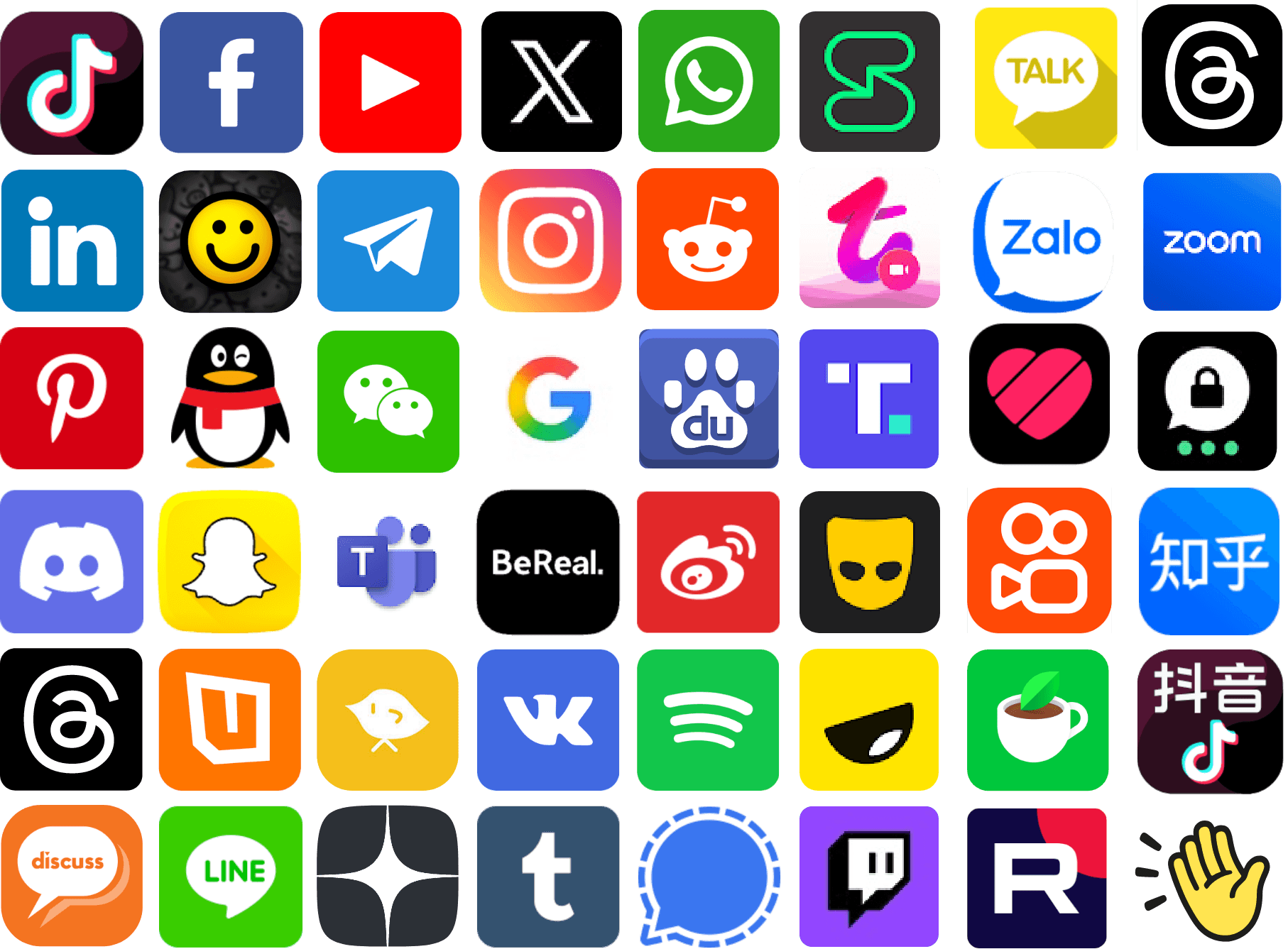
Apple's App Store and Google Play both operate on a country-by-country basis. Applications that are available in one market may be entirely absent from another. Regional platforms that are dominant in their home markets, applications used daily by hundreds of millions of people, do not appear in Western app stores at all. An analyst working from a European-registered device will not find them, cannot download them, and cannot access the communities that organise and communicate through them.
This is not a fringe problem. It applies to some of the most intelligence-rich environments that investigators need to access. Platforms widely used across parts of Asia, the Middle East, Latin America, and Eastern Europe for everything from commerce to political coordination to criminal communication are simply not accessible through a device that identifies itself as sitting in Paris or Amsterdam.
The problem runs deeper than availability. Even for applications that are nominally global, the experience varies by region in ways that matter for investigations. Some platforms surface different content, different communities, or different functionality depending on the registered location of the device. Features that are enabled in one market are suppressed in another. Search results and recommendations are localised in ways that make the platform look like a different product depending on where it thinks you are.
What Investigators Miss
The practical consequence is that investigators working without regional capability are conducting incomplete research, often without knowing what they are not seeing.
Consider a financial crime investigation into a network operating across multiple jurisdictions. The principals communicate through applications that are popular in their home market but absent from Western app stores. Their commercial activity runs through regional e-commerce and payment platforms. Their social connections are visible on local social networks with no European presence. An investigator working from a standard Western device has no access to any of this. The picture they build is not just incomplete; it is distorted, because the absence of this material is invisible. There is no gap on the screen telling them what they cannot see.
The same dynamic applies across the full range of investigative contexts. Counter-terrorism research into networks that organise through regional platforms. Corporate intelligence work that requires understanding how a target entity presents itself in its home market. Fraud investigations where the scheme operates through regional payment infrastructure. In each case, regional app access is not a supplementary capability. It is the difference between seeing the environment as it actually is and working from a partial, Western-centric view of it.
The Version Problem
Even for applications that are available globally, version matters. App stores in different countries do not always serve the same version of an application. Updates roll out on different schedules. Features that have been enabled in one market are still in testing or have been deliberately restricted in another. Privacy and data retention settings differ by jurisdiction, sometimes in ways that affect what information is visible within the platform.
For investigators, this creates a specific challenge: the version of an application on a European-registered device may not behave in the way that the application behaves for the subjects of the investigation. Understanding how a platform works, how its recommendation algorithm surfaces content, how its privacy settings affect visibility, how its search function operates, requires using the version of the platform that the relevant community is actually using.
Working from the wrong version is not a cosmetic problem. It can produce fundamentally misleading conclusions about how a network operates, how content spreads, or how a target presents themselves within a community.
The Closed Market Problem
Regional access becomes significantly more complex in markets where the digital environment is not just different but actively controlled.
In China, the standard global app stores do not operate. Access to applications runs through domestic alternatives, Huawei's AppGallery, Xiaomi's GetApps, and others, that are governed by domestic regulations and require accounts tied to local infrastructure. Platforms that are household names in the West are blocked entirely, replaced by domestic equivalents that operate under different rules and surface different data. Accessing those platforms as an outsider, without a device and identity that are consistent with a legitimate local user, is not straightforwardly possible. And for the most sensitive communities, closed groups, regional forums, invite-only channels, the barrier to entry goes further still. Participation requires not just local infrastructure but established presence and, in some contexts, account verification against a government-issued identity document.
Russia presents a similar challenge, compounded by the pace at which the environment has changed. Following the departure of Western platforms, domestic alternatives have grown significantly in both user base and intelligence relevance. VKontakte, Odnoklassniki, and a range of messaging and file-sharing platforms carry material that is simply not visible from outside the ecosystem. Here too, meaningful access to closed communities requires more than the right IP address. It requires accounts with histories, reputations, and in some cases connections to other verified users who have vouched for the identity seeking entry.
These are not edge cases. Investigations touching on sanctions evasion, organised crime with post-Soviet roots, state-adjacent commercial networks, or supply chains that run through controlled economies will at some point require genuine access to these environments. The alternative is working from open sources and public reporting, which is to say, working from the same material that everyone else has already seen.
What a Regional Device Changes
An analyst working from a device that presents as located in a specific country has a materially different view of the digital environment. They can access the local app store, download applications that are not available elsewhere, and operate within platforms as a local user rather than as an outsider looking in. The content they see, the communities they can observe, and the data they can access reflect the environment as it is, not as it appears from a distance.
This matters for collection. It also matters for understanding. Platforms shape the behaviour of the communities that use them. An analyst who cannot access a platform cannot understand how its structure, its norms, and its affordances influence the network they are investigating.
Regional access is not only about visibility. It is about analytical depth. The difference between knowing that a network uses a particular platform and being able to observe how they use it, what they discuss, how they are organised, and who the key nodes are, is the difference between a lead and intelligence.
The Infrastructure Requirement
Achieving genuine regional access is not as simple as using a VPN. App stores check more than IP addresses. Device registration, payment methods, language settings, and account histories all contribute to the platform's assessment of where a device is located and whether the access it is attempting is consistent with a legitimate local user.
An investigator attempting to access a regional app store through a consumer VPN, on a device registered in Western Europe, with a European payment method and European language settings, is not presenting as a local user. They are presenting as someone trying to appear to be a local user, which is a different thing, and platforms are increasingly capable of distinguishing between the two.
In more controlled markets, the gap between appearing local and being accepted as local is wider still. Platforms that require government-issued identity verification, or that rely on existing community members to vouch for new entrants, cannot be accessed through network routing alone. The identity layer has to be right, and building it takes time, consistency, and infrastructure that is specifically designed to support it.
Genuine regional access requires devices that are correctly registered, correctly configured, and consistently used in a way that is appropriate to the target region. That means device-level provisioning, correctly matched identities, and patient, disciplined persona development, not just network-level routing.
Why This Cannot Be Improvised
Teams that attempt to solve this problem ad hoc, routing through consumer services, using personal devices with manually adjusted settings, or relying on colleagues in-country to screenshot what they can see, are accepting a level of exposure and inconsistency that undermines both the quality of the intelligence and its defensibility.
Regional access done properly is governed, auditable, and operationally secure. The environments used for this work should be isolated from the organisation's standard infrastructure, the identities should be maintainable over time, and the activity should be logged in a way that can be accounted for if the collection is ever scrutinised.
For investigative teams whose work extends beyond Western-facing platforms, which, for most serious investigations, means all of them, that is the standard to aim for. The digital world is not geographically neutral, and investigations that treat it as though it were will keep missing what is hiding in plain sight.
Kuro supports lawful intelligence and investigative research for government agencies, law enforcement, journalistic and accredited private sector organisations. All use of the platform is subject to Kuro's Acceptable Use Policy and applicable legal frameworks.


